
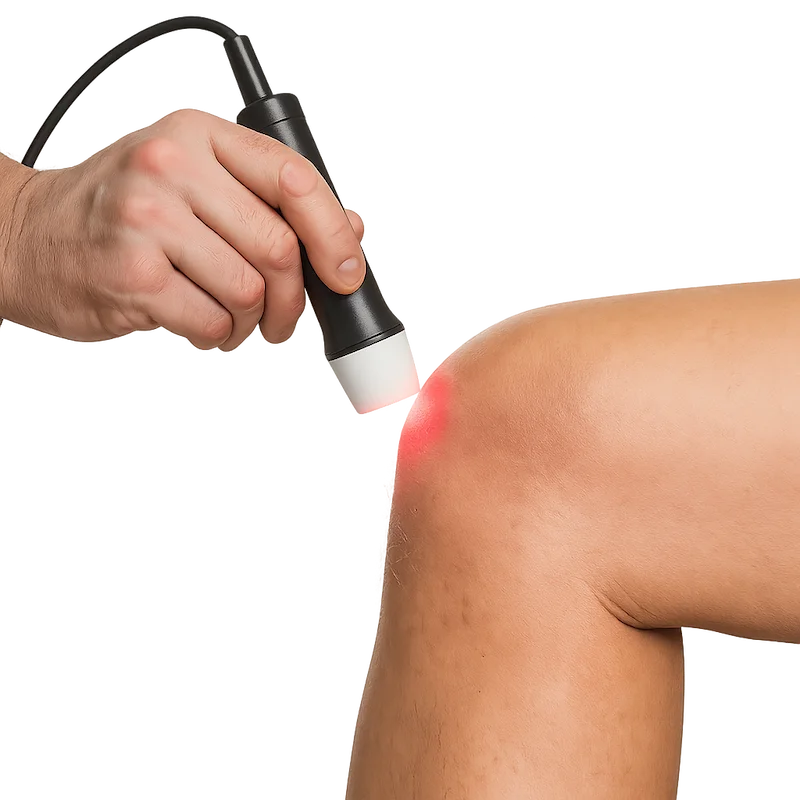
Class 4 laser therapy is one of the most effective non-surgical tools available for chronic knee pain, and it works in a fundamentally different way than most pain treatments. Rather than masking symptoms, it stimulates your cells to repair damaged tissue from the inside out. At Marin Regenerative Health in Novato, Class 4 laser therapy is a core component of Dr. Sarah Scharf’s knee pain protocol – and understanding why it is included helps explain why patients who have tried other treatments finally start seeing results.
What Is Class 4 Laser Therapy?
Class 4 laser therapy uses high-powered light energy to penetrate deep into tissue and trigger a cellular repair process called photobiomodulation. The light is absorbed by the mitochondria inside your cells – essentially the cells’ energy generators – and converted into fuel that the cells use to repair themselves, reduce inflammation, and produce new collagen.
The “Class 4” designation refers to the power output, which is significantly higher than the Class 3b cold laser devices many clinics use. That distinction matters enormously for knee pain treatment. Cold laser devices typically penetrate only a few millimeters into tissue – enough to affect the skin surface and superficial soft tissue, but not the joint structures where the real problem lives.
Class 4 laser penetrates up to 7 centimeters deep. That is enough to reach the joint capsule, the synovial membrane, the cartilage, and the underlying bone surface. For conditions like knee osteoarthritis, meniscus tears, or patellar tendinitis, the ability to reach those deeper structures is what makes the difference.
How Photobiomodulation Helps a Damaged Knee
When light energy at the right wavelengths hits metabolically stressed or damaged cells, it accelerates several important processes at once.
Reducing Inflammation at the Source
Chronic knee pain is almost always driven by ongoing inflammation inside the joint. That inflammation is not just painful – it actively degrades cartilage and soft tissue over time. Photobiomodulation has been shown to reduce pro-inflammatory cytokines and decrease swelling in joint tissues. This is not the temporary suppression you get from a cortisone shot. It is a reduction in the underlying inflammatory process.
Accelerating Tissue Repair
Cartilage heals slowly because it has limited blood supply. Laser therapy improves circulation to the joint and boosts the cellular energy available for repair. The cells in the joint capsule, synovial lining, and surrounding tendons and ligaments become more metabolically active, which means they rebuild faster and more effectively.
Stimulating Collagen Production
Collagen is the structural protein that makes up cartilage, tendons, and ligaments. In a degenerating knee, collagen production slows down and existing collagen breaks down faster than it is replaced. Photobiomodulation stimulates fibroblast activity, which drives new collagen synthesis. Over the course of a treatment program, this helps restore the structural integrity of the joint tissues.
Relieving Pain Directly
Beyond the tissue repair effects, Class 4 laser therapy also has a direct analgesic effect. It reduces the sensitivity of pain receptors in the treated area and promotes the release of endorphins. Many patients notice pain relief that begins during or immediately after their first few sessions, even before the longer-term tissue changes have had time to accumulate.
What Conditions Does It Help?
Class 4 laser therapy is effective for a wide range of knee pain conditions, including:
- Knee osteoarthritis – reduces inflammation and supports cartilage health in worn or degenerating joints
- Meniscus tears – promotes repair in the damaged cartilage tissue and reduces joint swelling
- Patellar tendinitis – accelerates healing in the patellar tendon and reduces chronic tendon inflammation
- Bursitis – calms inflamed bursae and reduces localized swelling
- Post-surgical knee pain – supports tissue healing and reduces scar tissue formation after knee procedures
- General joint degeneration – addresses wear-and-tear changes in the joint that have accumulated over years
For patients dealing with osteoarthritis, this therapy is particularly valuable because it targets the inflammatory process and tissue breakdown that drive the condition forward – rather than simply managing the pain those processes produce.
What Does a Laser Therapy Session Feel Like?
Most patients describe Class 4 laser therapy as comfortable and even pleasant. The handpiece is moved slowly over the knee in overlapping passes. You typically feel a gentle warming sensation as the energy penetrates into the tissue. There is no pain, no needles, and no downtime. Sessions usually take 10 to 15 minutes depending on the size of the treatment area.
Some patients notice relief the same day. Others feel the effects more gradually over the first several sessions as the tissue changes accumulate. Consistency matters – laser therapy works best as a series of treatments rather than a one-time application.
Why Class 4 Laser Is Part of Dr. Scharf’s Knee Protocol
At Marin Regenerative Health, Class 4 laser therapy is not offered as a standalone treatment. It is one of nine therapies in Dr. Scharf’s 12-week knee pain relief protocol – and its role is to address the tissue repair layer of healing while other therapies address mechanics, neuromuscular function, joint decompression, and whole-body alignment.
This matters because knee pain is almost never caused by just one thing. Laser therapy can reduce inflammation and accelerate cellular repair, but if the biomechanical forces loading the knee abnormally are not also addressed, the inflammation tends to return. When laser is combined with knee decompression, shockwave therapy, chiropractic alignment work, and the other protocol components, the cumulative effect is significantly greater than any single therapy could produce alone.
Dr. Scharf has been treating knee pain patients in Novato and throughout Marin County since 2006. The therapies in her protocol – including Class 4 laser – are there because they consistently produce results in the patient population she sees: adults with chronic knee pain who have often already tried multiple other approaches without lasting improvement.
How Is This Different From Red Light Therapy Devices at Home?
This is a question that comes up often given the growing popularity of consumer red light therapy panels and wraps. The honest answer: clinical Class 4 laser therapy is not the same thing as a consumer LED or red light device, even a high-quality one.
The difference is in power density and coherence. Clinical laser devices deliver significantly more energy per unit area than consumer panels, and the coherent nature of laser light allows it to penetrate tissue much more deeply. A home red light panel can offer some real surface-level benefits, but it cannot replicate the depth of penetration or the treatment intensity of a Class 4 clinical device.
That said, the home LED therapy device that patients receive as part of the 12-week protocol is a meaningful complement to in-clinic laser sessions – it supports ongoing tissue repair between visits. It just serves a different purpose than the clinical laser treatment itself.
Is Class 4 Laser Therapy Right for You?
If you are dealing with chronic knee pain in Novato or the surrounding Marin County area – whether from arthritis, a meniscus tear, tendon issues, or general wear and tear – Class 4 laser therapy may be a meaningful part of your path to recovery.
The best way to find out if it is a good fit for your specific condition is to start with a thorough evaluation. Dr. Scharf reviews your history, your imaging if available, your current symptoms, and your goals before recommending a treatment plan. Schedule your consultation at Marin Regenerative Health today or call us at (415) 818-0243. Flexible payment plans are available for the 12-week knee program.