
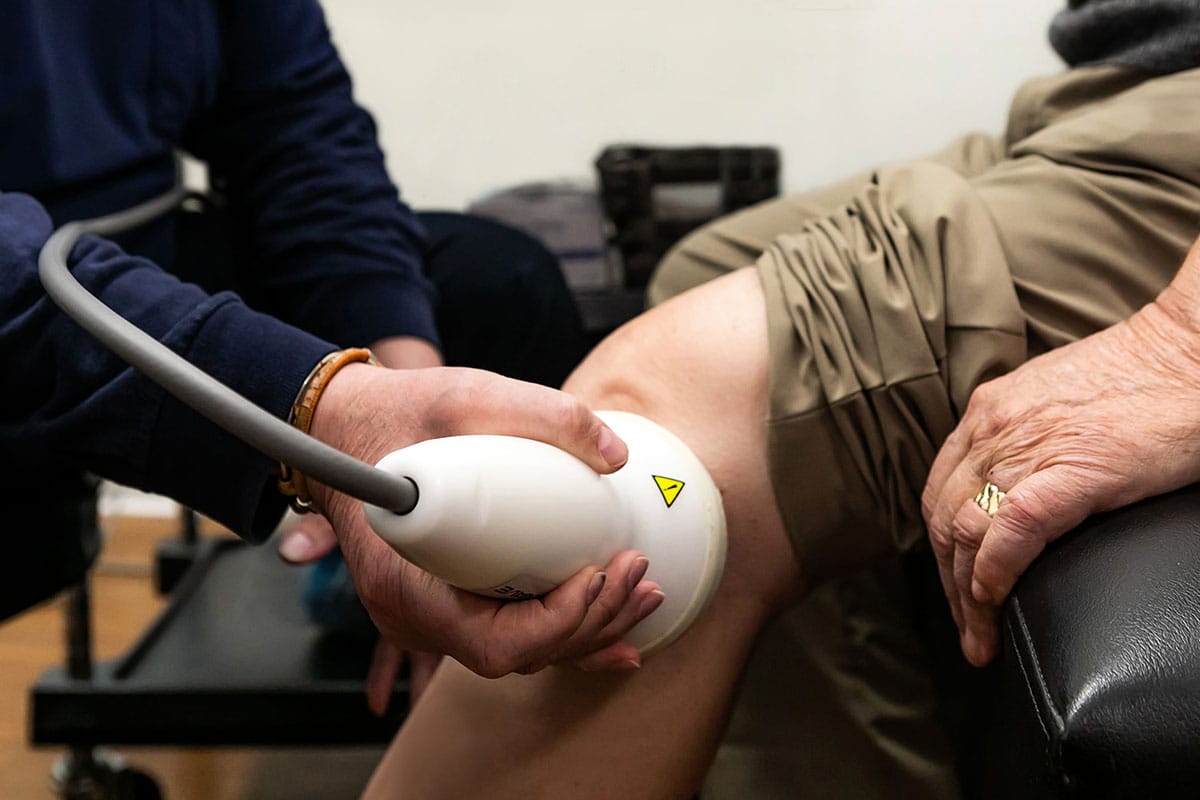
The Marin Regenerative Health 12-Week Knee Pain Relief Protocol is a structured, multi-modal program that combines nine evidence-based therapies to reduce chronic knee pain, restore joint function, and rebuild strength, without surgery or medication. Dr. Sarah Scharf developed and refined this system over years of treating knee pain patients in Novato and Marin County. It is not a generic chiropractic plan – it is a comprehensive, layered approach where every therapy has a specific job, and all nine work together to address your knee from the inside out.
Why Nine Therapies? Why Not Just One?
That is one of the most common questions we hear. And it is a fair one.
The reason most knee pain treatments fail – physical therapy, cortisone shots, even standard chiropractic – is that they address one layer of the problem while ignoring the others. Cortisone quiets inflammation for a few weeks, but does nothing for the cartilage loss driving it. Physical therapy strengthens muscles, but misses the nerve signaling breakdown that made those muscles weak in the first place.
Chronic knee pain is rarely just one thing. It is usually a combination of joint degeneration, inflammation, neuromuscular dysfunction, biomechanical misalignment, and poor circulation to the tissue. To get lasting results, you have to work on all of those layers at once. That is what the protocol does.
Each of the nine therapies in Dr. Scharf’s system targets a different layer of healing. Some work at the cellular level. Some work on the nervous system. Some work on alignment and mechanics. When you combine them in a structured 12-week program, the results are significantly better than any single therapy could produce on its own.
The Nine Therapies in the Protocol
Here is how each piece of the 12-week knee pain relief protocol works and why it is included.
1. Chiropractic Care – The Foundation
Most people think chiropractic is just for backs. But at Marin Regenerative Health, chiropractic adjustments form the structural foundation of the entire knee program.
Here is why this matters: your knee does not hurt in isolation. Tight hips pull on the fascia and thigh muscles, compressing the knee joint from above. Poor foot and ankle mechanics twist the lower leg with every step, forcing the knee into an unnatural angle. Even lower back misalignment can change the way you walk and load your joints.
Chiropractic care in this protocol addresses the full kinetic chain – spine, pelvis, hips, ankles, and the knee itself. Once everything is properly aligned, the knee is no longer compensating for problems above and below it. That changes everything.
2. Knee-On-Trac Decompression Therapy
The Knee-On-Trac system is a patented, non-invasive mechanical decompression device designed specifically for the knee joint. It gently separates the femur from the tibia, creating negative pressure inside the joint.
That negative pressure does two important things. First, it draws nutrient-rich synovial fluid back into the joint space – the natural lubrication and nourishment the cartilage depends on but often lacks in arthritic or degenerating knees. Second, it stretches the surrounding tendons, ligaments, and soft tissue that have tightened up around a painful joint.
Most patients feel something positive from knee decompression within the first few sessions. It is one of the therapies that often produces early momentum in the program.
3. Class 4 Laser Therapy
This is not the low-level cold laser many people have tried at other clinics. Class 4 laser therapy uses significantly higher power output, which allows it to penetrate up to 7 centimeters into tissue – reaching the joint capsule, synovial membrane, and cartilage structures that shallower lasers simply cannot touch.
The process is called photobiomodulation. The light energy is absorbed by the cells and converted into energy they use to repair themselves. It boosts circulation, reduces inflammation, and stimulates collagen production, all without needles, drugs, or downtime.
For patients dealing with knee osteoarthritis or cartilage wear, Class 4 laser therapy is one of the most direct tools we have for supporting tissue-level healing.
4. Focused Shockwave Therapy
Shockwave therapy delivers high-energy acoustic waves deep into injured knee tissue. The waves trigger your body’s natural healing response – stimulating blood flow, promoting new blood vessel formation, and accelerating cellular repair in tendons, ligaments, and cartilage.
It is particularly effective for chronic tendon and ligament injuries that have not responded to other treatments. Tissue that has been inflamed for months or years often becomes fibrotic and loses its normal blood supply. Shockwave therapy essentially restarts the healing process in that tissue.
Most patients need three to six sessions, and the results tend to build over time as the tissue continues to remodel after each treatment.
5. Trigenics Neuro-Kinetic Therapy
This is one of the most distinctive components of the protocol and one that most patients have never encountered anywhere else.
Trigenics is a specialized neurological treatment system that addresses the communication breakdown between your nervous system and the muscles that support your knee. When a joint is chronically painful or injured, the nervous system often begins misfiring – inhibiting certain muscles and over-activating others. This creates weakness, instability, and abnormal movement patterns that persist even after the underlying tissue damage has healed.
During a Trigenics session, Dr. Scharf applies specific hands-on techniques to stimulate nerve pathways while you perform guided movements under resistance. This resets the nerve-to-muscle signaling. The results are often immediate – patients frequently experience measurable improvements in strength and range of motion within a single session.
For patients who have been told their knee is “structurally fine” but still hurts, or who have completed surgery but have not regained full function, this neuromuscular layer is often exactly what has been missed.
6. LED Light Therapy for Home Use
One of the things that separates this protocol from a standard in-office treatment plan is that healing does not stop when you leave the clinic.
Every patient in the program receives a professional-grade LED light therapy device to use at home between visits. The device delivers red and near-infrared light wavelengths into the knee tissue for 15 to 20 minutes daily, supporting circulation, managing inflammation, and promoting tissue repair continuously throughout the 12 weeks.
This is not a consumer gadget. It is clinical-strength equipment, and using it consistently at home is one of the factors that drives better outcomes in the program.
7. Custom Foot Levelers Orthotics
Your feet hit the ground thousands of times a day. If the mechanics are off – even slightly – the stress adds up fast. Flat arches, overpronation, and uneven foot loading all send abnormal forces up through the ankle, into the knee, and beyond.
Every patient in the protocol receives custom Foot Levelers orthotics crafted from a gait analysis and individual foot structure assessment. These are not off-the-shelf insoles. They are built specifically for your foot to correct alignment throughout the entire kinetic chain and reduce the abnormal forces your knee absorbs with every step.
Many patients are surprised by how much difference properly fitted orthotics make once the rest of the program is also in place.
8. Anti-Inflammatory Nutrition Guidance
Inflammation is a central driver of knee pain – and what you eat either adds fuel to that fire or helps put it out.
Throughout the 12 weeks, patients receive personalized nutrition guidance focused on reducing pro-inflammatory foods and increasing joint-supporting nutrients. We keep it practical: specific foods to focus on, meal ideas, and shopping lists. No restrictive diets, no calorie counting.
The research on diet and joint inflammation is solid. Fatty fish, leafy greens, berries, olive oil, turmeric, and ginger all have meaningful anti-inflammatory effects. When patients actually implement these changes alongside the in-clinic therapies, recovery tends to go faster.
9. Daily Stretching and Strengthening Program
The in-clinic work is powerful, but it needs to be supported by what you do at home. Every patient receives a personalized daily exercise program with video demonstrations and written instructions. It takes about 10 to 15 minutes and is designed to complement the treatments rather than overlap or interfere with them.
The focus is on the muscles that directly support the knee – quadriceps, hamstrings, hip flexors, and calves – as well as balance and coordination. The program progresses gradually as you improve, so you are never pushed beyond what your knee can handle at each stage.
What the 12 Weeks Actually Look Like
Most patients come in two to three times per week during the restorative phase. Sessions typically run 45 minutes to an hour. On the days between visits, you are doing your home LED therapy and daily exercises.
The first few weeks are about calming the inflammation and beginning to restore joint mechanics. By the middle of the program, most patients are noticing real differences in their daily pain levels and mobility. The final weeks focus on rebuilding strength and stability so the results hold long term.
What you can typically expect by the end of the 12 weeks: decreased pain and inflammation, improved range of motion and flexibility, better strength and stability, reduced morning stiffness, and less reliance on over-the-counter pain relievers.
After completing the protocol, patients have the option to continue with a 6-month maintenance program to protect their results and keep progressing.
Who Is This Protocol Designed For?
The program works well for a wide range of knee pain conditions, including:
- Knee osteoarthritis and cartilage degeneration
- Meniscus tears and ligament injuries
- Tendonitis and bursitis
- Runner’s knee and patellofemoral pain
- Post-surgical knee pain or lingering stiffness after knee replacement
- Chronic wear-and-tear pain that has not responded to other treatments
A significant portion of the patients Dr. Scharf sees have already tried physical therapy, cortisone injections, or standard chiropractic care without lasting results. They come to Marin Regenerative Health because they want something more comprehensive – and because they are not ready to accept surgery as their only remaining option.
Not everyone is a candidate for the protocol. Dr. Scharf conducts a thorough evaluation before recommending the program to make sure it is the right fit for your specific condition and goals.
A System Built Over Years of Clinical Practice
Dr. Sarah Scharf has been treating pain patients since 2006. She founded Marin Regenerative Health specifically to bring this level of regenerative, non-surgical care to Marin County – because she kept seeing what happened when patients were handed a prescription or sent to a surgeon without ever being given a real alternative.
The 12-week protocol is the result of years of refining what actually works for knee pain patients. It is not a template pulled from a textbook. Every component in it earned its place through clinical outcomes. And while the structure is consistent, the specific application is always tailored to the individual patient.
If you have been living with knee pain in Novato or anywhere in Marin County and want to understand whether this program could help you, the first step is a comprehensive knee evaluation. Schedule your consultation with Dr. Scharf today or call us at (415) 818-0243. Flexible payment plans are available.